
Ghana’s Mahama Calls for Reparations at UN During US-Africa Week
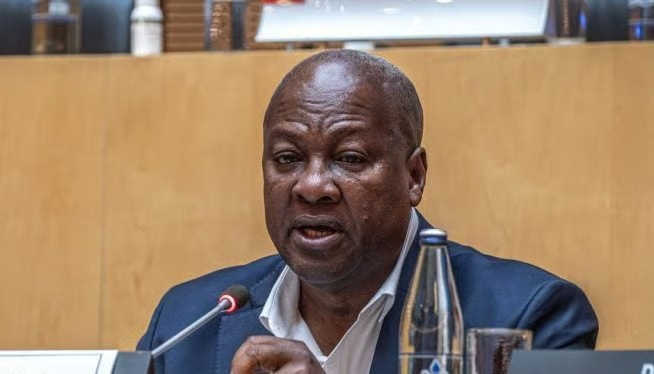
During the upcoming US-Africa Week, former Ghanaian President John Mahama is set to make a strong case for reparations at the United Nations, emphasizing the lasting impact of colonialism and the transatlantic slave trade on African nations.
Mahama, who has been a vocal advocate for Africa’s historical and economic justice, plans to highlight the moral and economic arguments for reparations, calling on the international community to acknowledge past injustices and provide support for development initiatives across the continent.
The former leader will use the platform of US-Africa Week to engage with diplomats, policymakers, and global stakeholders, outlining specific proposals aimed at addressing historical inequities. His participation is expected to spark discussion on both political and financial commitments from former colonial powers.
Analysts say Mahama’s advocacy aligns with a broader continental push for reparations, with several African leaders and civil society organizations emphasizing the need for acknowledgment, apology, and compensatory measures to address the legacies of slavery and colonial exploitation.
US-Africa Week provides a key venue for such discussions, as it brings together leaders from across Africa, the United States, and other partners to discuss trade, security, development, and human rights issues. Mahama’s appearance is anticipated to be one of the highlights of the week, drawing attention to the historical responsibilities of the international community.
Observers note that while reparations remain a contentious topic in global diplomacy, Mahama’s efforts aim to frame the discussion in terms of justice, economic equity, and sustainable development. He is expected to present data and historical context to strengthen his case.
The initiative also seeks to galvanize public support and international awareness about Africa’s historical grievances, positioning reparations as both a moral and practical imperative.
As US-Africa Week unfolds, attention will be on the outcomes of discussions, particularly on whether Mahama’s advocacy influences policy decisions or stimulates further dialogue on reparations for African nations.
The engagement underscores the importance of historical accountability in contemporary international relations and Africa’s efforts to seek justice on the global stage.
About the Author


