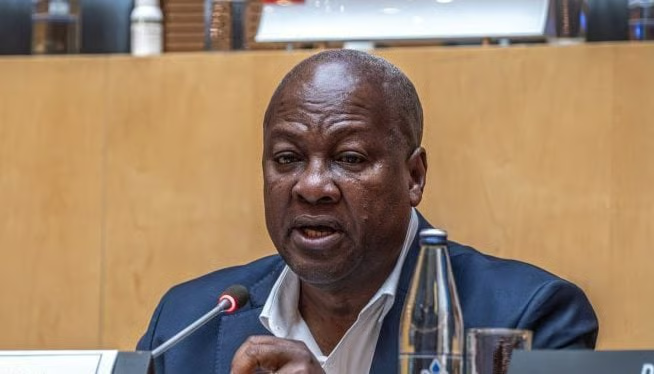
Court Jails Former Accountant-General 72 Years for Fraud
A court has sentenced a former Accountant-General to a total of 72 years in prison after finding him guilty of multiple counts of fraud and financial misconduct involving public funds.
The judgment followed a lengthy trial in which the prosecution presented evidence detailing how the convict allegedly diverted and misappropriated large sums of government money over a period of time. The court ruled that the offences were proven beyond reasonable doubt.
The convicted former official, who once occupied a key position in public financial management, was found guilty on several charges related to corruption, abuse of office, and unlawful enrichment. The court ordered that the sentences run concurrently and take effect immediately.
According to the ruling, the fraudulent activities undermined public trust and caused significant financial loss to the government. The judge emphasized that public office holders must be held to high standards of accountability, particularly in matters involving public funds.
Anti-corruption agencies that prosecuted the case welcomed the judgment, describing it as a major step in the fight against financial crimes in the public sector. They reiterated their commitment to pursuing similar cases to ensure accountability and transparency.
Legal analysts note that the case highlights ongoing efforts by law enforcement agencies to address systemic corruption within public institutions. They say such convictions serve as both punishment and deterrence for future misconduct.
Members of the public have also reacted to the ruling, with many expressing satisfaction that the justice system is taking a stronger stance against financial corruption. Others have called for broader reforms to prevent similar cases in the future.
The defence team, however, is expected to consider an appeal, arguing that there were aspects of the trial that may require further judicial review.
The sentencing marks one of the most significant corruption-related convictions involving a senior public financial officer in recent years.
As the case concludes at the trial stage, attention now turns to how enforcement agencies will ensure the recovery of any misappropriated funds linked to the case.
The judgment reinforces the judiciary’s position on accountability in public service and the consequences of financial misconduct.
About the Author