Woro Kwara village jihadist massacre chief recounts terror
Hundreds of lives were lost and countless families torn apart when jihadist militants carried out a brutal massacre in the Kwara State village of Woro, and the village chief’s account paints a harrowing picture of the night of terror that unfolded. Survivors say the attack, one of the deadliest in Nigeria this year, began in the early evening and lasted until the early hours of the next morning, leaving deep trauma in its wake.
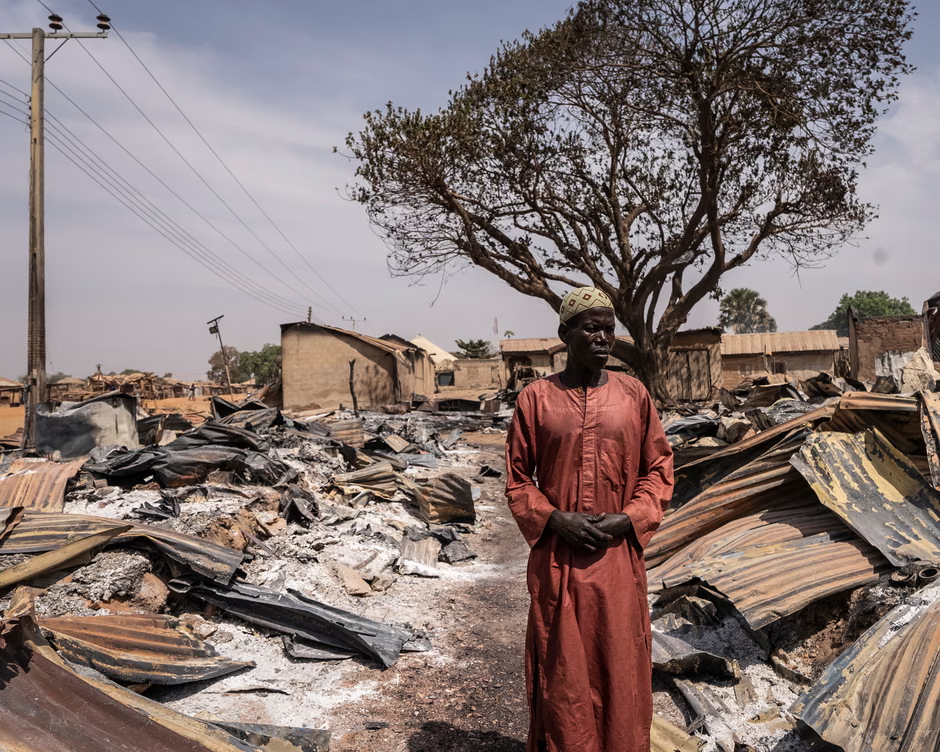
Chief Umar Bio Salihu, the traditional leader of Woro, recounted how the assault began around 5 p.m., when heavily armed gunmen entered the village after sending a letter claiming they would come to “preach.” Because the villagers did not attend the supposed preaching, the group turned violent, opening fire and setting fire to buildings and shops. Salihu said the attackers “just came in and started shooting,” striking indiscriminately as families tried to flee.
In his account of that night, Salihu described heartbreaking personal losses. The gunmen killed two of his sons at the front of his home, then abducted his wife and three daughters, taking them into the surrounding bush. Several residents reported that people were burned inside their houses and that the smell of smoke and gunpowder lingered as the violence continued late into the night. Salihu survived by hiding in a nearby house and later fleeing to the neighbouring town of Kaiama once the attackers left.
The death toll remains grim. The International Committee of the Red Cross has cited at least 162 fatalities, and ongoing efforts are underway to recover bodies and identify the missing. Entire families and neighbours were killed or gone, and villagers say many homes were reduced to ashes, with scenes of destruction stretching across the once-quiet community.
Salihu and other survivors emphasised that the people of Woro reject the gunmen’s claimed ideology and had no interest in the extremist beliefs the attackers tried to spread. The chief said residents had alerted local security services after receiving the initial letter, but the warning came too late to prevent the massacre.
The attack has drawn condemnation from national and international figures and highlighted the widening reach of jihadist groups in parts of Nigeria previously considered relatively secure. It has intensified calls for stronger protections for vulnerable communities and more effective security responses to a crisis that continues to displace and terrorise civilians.
About the Author