
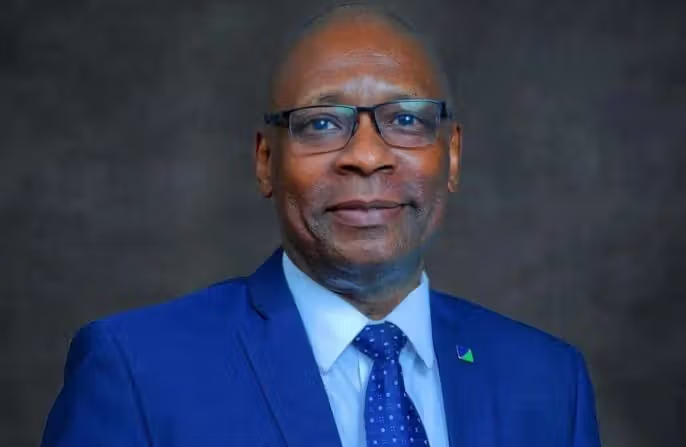
Ex-AMCON Chief Mustafa Chike-Obi Slams Atiku’s Subsidy Plan as ‘Extremely Naive’
Mustafa Chike-Obi, former chairman of Fidelity Bank and inaugural chief executive of the Asset Management Corporation of Nigeria (AMCON), has criticised former Vice President Atiku Abubakar’s plan to reintroduce petrol subsidy if elected president in 2027, describing the proposal as naive and warning it could amount to spending half of the country’s national wealth in foreign exchange.
Chike-Obi made the remarks on Thursday, August 27, while speaking on the Policy Without Politics podcast, which he co-hosts alongside Ken Ikpe, chief executive officer of Graviti Hill Limited. His comments come in response to a declaration Atiku made on August 19, in which the African Democratic Congress (ADC) presidential candidate said he would restore the petrol subsidy if elected, arguing that the current administration had failed to properly account for the funds saved from its removal.
Addressing the proposal directly, Chike-Obi did not mince his choice of words, though he was careful about how far he went. “I like the word naive. It doesn’t offend anybody here. It is what it is. I have a stronger word, but I will not use it,” he said. He went on to lay out the core of his economic objection, explaining that selling crude oil at a discount effectively amounts to giving away a significant share of the nation’s wealth. According to him, if a country capable of selling crude at $100 a barrel instead prioritises selling it at $50, it has effectively spent half of its national wealth in foreign exchange terms on that single product, which he argued reflected a badly misplaced sense of priority.
Beyond the direct financial cost, Chike-Obi also raised concerns about the practical enforcement challenges that would come with reintroducing a subsidy regime, pointing to the strong financial incentive it would create for suppliers to smuggle subsidised products out of the country. He argued that maintaining such a system would require government to closely monitor producers, impose strict price controls, and build an extensive enforcement apparatus simply to prevent subsidised petrol from being diverted or exported illegally, a level of market intervention he described as impractical.
Chike-Obi also referenced Nigeria’s earlier subsidy framework, under which the state-owned Nigerian National Petroleum Company (NNPC) purchased petrol and resold it at a fixed price as a means of controlling costs for consumers. While he acknowledged that this approach was comparatively more efficient than some alternatives, he maintained that it, too, ultimately failed to work as intended.
As an alternative, Chike-Obi proposed that if the government does move forward with any form of subsidy, it would be better served channelling support directly to low-income Nigerians through a targeted voucher system rather than subsidising fuel prices broadly. He suggested the government could apply an income threshold to determine eligibility, issuing vouchers to Nigerians who fall below a specified income level. While acknowledging that even a voucher-based approach would not be entirely efficient, since some recipients might resell the vouchers rather than use them for fuel, he argued it would still represent a better-targeted use of public resources than a blanket subsidy.
Ikpe, speaking alongside Chike-Obi on the same podcast, echoed a similar sentiment, arguing that Nigeria’s current fuel pricing policy remains a stronger approach than what Atiku has proposed. He called for existing government policies to be reviewed and strengthened where necessary rather than abandoned, stressing the importance of continuity in economic policymaking regardless of changes in political leadership.
Chike-Obi’s comments add to a growing chorus of reactions to Atiku’s subsidy pledge, which has continued to generate debate among economists, political figures and rival presidential contenders as Nigeria’s 2027 election season gathers pace.
About the Author


