Union Alerts Nigerians in South Africa Ahead of September 30 Anti-Migrant Protest
Nigerians in South Africa are bracing for possible unrest as an anti-migrant movement prepares to restart its campaign on September 30. The Nigerian Union South Africa (NUSA), the main community body for Nigerians in the country, has spoken openly about growing fear among its members as the date approaches.
Why September 30 Matters
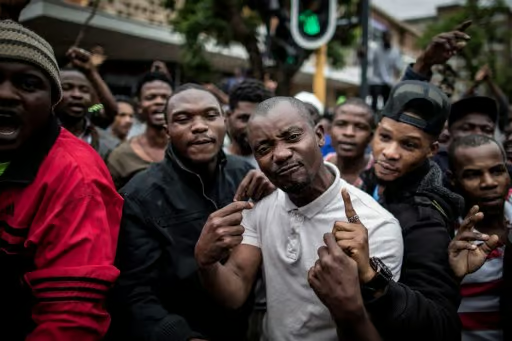
The date comes from the March and March movement, a group founded in Durban in 2024 that has led protests demanding that undocumented foreign nationals leave South Africa. The group first set a June 30 deadline. Demonstrations took place that day in several cities, including Johannesburg and Durban, and soldiers were deployed to Hillbrow after a march in Johannesburg. Organisers have now named September 30 as the next date for action, and they have also tied the day to concerns about gender-based violence.
Community Anxiety
NUSA’s national publicity secretary, Akindele Olufemi Olunloyo, said there is significant anxiety and fear within the Nigerian community. That fear is not abstract. Two more Nigerians died in South Africa in the run-up to the earlier deadline. Nigeria’s ambassador-designate to South Africa, Lesotho and Eswatini, Femi Fani-Kayode, has said eight Nigerians have been killed in the country this year, with four of those deaths allegedly involving police officers.
Documents Offer Little Comfort
Reports from migrant communities suggest that legal status does not always protect people. Refugees and asylum seekers who camped outside the Durban Refugee Reception Centre said they were confronted by March and March members on September 3. Some told reporters that hostility on the streets rarely starts with a request for papers. The tension is also sharpened by the approach of local government elections.
A Movement Under Strain
The movement appears to be under some pressure of its own. It suspended its working relationship with activist Ngizwe Mchunu in July, saying politicians and businesspeople were trying to capture the campaign. Weekly marches have reportedly thinned out. Even so, the group has kept up its message, and its earlier actions, including the closing of migrant-owned shops in one town after a court ordered them reopened, show it can still cause real disruption.
The Government’s Position
South African authorities have said that immigration enforcement is the job of the state, not of citizen groups. The government has stepped up enforcement operations in response to public pressure and set aside 600 million rand for security around the June 30 protests. Official figures put the migrant population at nearly 3.1 million, just under 4 percent of the country.
Safety Steps for Community Members
Community organisations in past tense periods have generally urged members to stay calm, avoid crowds and protest routes, carry valid documents, keep phone numbers for their embassy or high commission and community leaders, and report any threats to the police. Nigerians in South Africa should follow updates from NUSA and the Nigerian mission for guidance specific to their area.
What to Watch
The coming days will show whether September 30 passes peacefully. Much depends on turnout, how police handle the marches and whether Nigerian and South African officials can ease the tension that has returned between the two countries.
About the Author