Atiku’s Seventh Presidential Bid Splits Opinion Ahead of 2027 Poll
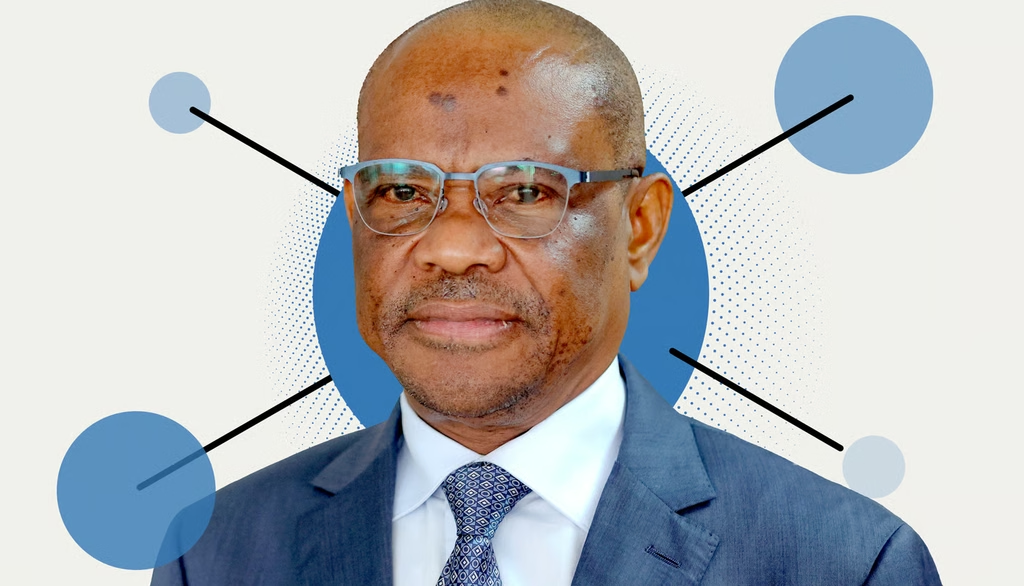
As Nigeria’s 2027 general election draws closer, one storyline keeps resurfacing in political commentary: Atiku Abubakar’s decision to run for president a seventh time. The former vice president has secured the presidential ticket of the African Democratic Congress (ADC), setting up a rematch of sorts against incumbent President Bola Tinubu, who is seeking a second term. But rather than settling debate about his candidacy, the announcement has reignited it, with sharply divided reactions from analysts, former allies, and political rivals.
Among the loudest critics is former Aviation Minister Femi Fani-Kayode, who used a widely shared opinion piece to question why Abubakar continues to pursue the presidency after six unsuccessful attempts stretching back to 1993. Fani-Kayode traced the arc of those campaigns, from a lost SDP primary to MKO Abiola in 1993, through defeats in party primaries in 2011 and 2015, to general election losses in 2007, 2019, and 2023. He argued that Abubakar’s pattern of switching parties and alliances, including his time with the PDP, APC, and now ADC, reflects a transactional approach to politics rather than genuine national purpose. Fani-Kayode predicted the seventh bid would end the same way as the previous six, with Abubakar returning to private life after the vote.
That view is far from universal. Political analyst Kelly Agaba has offered a competing interpretation, framing Abubakar’s repeated candidacies not as stubbornness but as evidence of what he calls leadership stamina. Agaba has pointed to Nigeria’s current economic strain, rising insecurity, and public frustration with the ruling party as conditions that could make 2027 fundamentally different from Abubakar’s earlier runs. In his view, voters should weigh Abubakar’s policy proposals and experience rather than simply counting how many times he has appeared on a ballot.
The substance of Abubakar’s campaign has also become part of the debate. He has pledged to restore Nigeria’s fuel subsidy if elected, a position that has picked up backing from ADC governorship candidates in the North-West but has also drawn scrutiny given the subsidy’s earlier removal and its impact on public finances. Abubakar has additionally accused the current administration of using state institutions to weaken opposition parties, a claim that has become a recurring theme in his public remarks since securing the ADC nomination.
Age has emerged as another point of contention. Abubakar is approaching 80, making him one of the oldest major candidates in the race, and critics have suggested this raises questions about generational change within Nigeria’s opposition movement. Supporters counter that experience and institutional knowledge matter more than age in navigating the country’s complex political landscape.
With INEC’s final candidate list confirmed and the January 2027 election date locked in, the coming months are likely to sharpen these divisions further. Whether Abubakar’s seventh attempt is remembered as persistence rewarded or a campaign too far will ultimately be decided not by commentators, but by voters at the polls.
About the Author